Insights
Pillow Height Guide: The Right Loft for Every Sleeping Position
You know your pillow matters. But have you ever measured it? Not its comfort - its height.
Pillow loft - the vertical height of the pillow when compressed under the weight of your head - is the single most important physical specification that determines whether your cervical spine stays aligned or gets wrecked every night. Too high and your neck bends forward. Too low and it bends backward. Either way, you’re generating the neck pain, headaches, and shoulder stiffness that plague tens of millions of sleepers.
Here’s the definitive guide to choosing the exact right height for your body.
Understanding Loft
“Loft” refers to the height of the pillow under load - meaning after your head sinks into it. A pillow might measure 5 inches when sitting on a shelf, but if it compresses to 2 inches under your head (as most cheap fiberfill pillows do), its effective loft is only 2 inches.
This distinction is critical. The loft that matters is how high your head is held while you’re sleeping, not how your pillow looks on a display shelf.
Loft by Position
Back Sleepers: 3–4 Inches
When you sleep on your back, your head needs to travel the shortest distance to the mattress. A pillow with 3–4 inches of effective loft gently supports the natural lordotic curve of your cervical spine without pushing your chin toward your chest.
The test: Lie on your back on your pillow. Have someone look at your profile from the side. Your chin should be level - not tilted up toward the ceiling (pillow too flat) and not tucked down toward your chest (pillow too high). Your forehead and chin should be at roughly the same horizontal level.
Side Sleepers: 4–6 Inches
Side sleeping creates the largest gap between your head and the mattress. The pillow must fill the entire space from your ear to the outside edge of your shoulder. For most adults, this requires 4–6 inches of effective loft.
Too little loft here causes the head to drop toward the mattress, bending the spine sideways and compressing the shoulder joint. Too much loft pushes the head away from the mattress, straining the muscles on the opposite side of the neck.
The test: Have someone check that your spine forms a perfectly straight horizontal line from your tailbone through your neck. Any visible dip or hump at the neck means your loft is wrong.
Stomach Sleepers: 2–3 Inches (or None)
Stomach sleeping is the most challenging position for pillow selection because any meaningful loft forces the neck into hyperextension. If you can’t transition away from stomach sleeping, use the flattest, softest pillow possible - or no pillow at all - to minimize the cervical extension angle.
That said, the best sleeping position for neck pain is almost always on your back or side.
Body Type Adjustments
Broader Shoulders → Higher Loft
If you have wide, athletic shoulders, the gap between your head and the mattress when side sleeping is significantly larger than average. You may need 5–6 inches of effective loft where a petite person might only need 3–4.
Heavier Body Weight → Firmer Pillow
A heavier head sinks deeper into the pillow, reducing effective loft. If you weigh more than average, you need a pillow with higher density foam that resists compression, maintaining its height under greater load.
Softer Mattress → Lower Loft
On a soft mattress, your shoulder sinks deeper into the bed when side sleeping, which actually reduces the gap the pillow needs to fill. Conversely, a firm mattress means your shoulder sits on top of the surface, increasing the gap and requiring more loft.
Why Adjustable Pillows Rarely Work
Many pillows marketed as “adjustable” use loose shredded foam or removable inserts. In theory, this lets you customize the loft. In practice, loose fill shifts constantly during the night, creating uneven surfaces, lumps, and inconsistent support. You might fall asleep on 4 inches of loft and wake up on 2 inches because the fill migrated.
The most reliable way to maintain consistent loft is a single block of high-density foam - a material that cannot shift, migrate, or redistribute during sleep. This is exactly the approach described by experts when choosing a pillow for comfortable, uninterrupted sleep.
The Siestly Precision Approach
The Siestly Pillow is built from a solid, gel-infused Active-Core memory foam block. It’s engineered to maintain precise loft throughout the entire night. The foam compresses adaptively under the weight of your head - providing a custom cradle - while maintaining full height under your neck where support is most critical.
This means whether you’re a broad-shouldered side sleeper or a lighter-framed back sleeper, the Siestly pillow dynamically adjusts to provide the exact cervical support angle your spine needs.
Stop guessing. Start measuring. Visit the Siestly Pillow page and experience pillow loft that’s actually engineered, not stuffed.
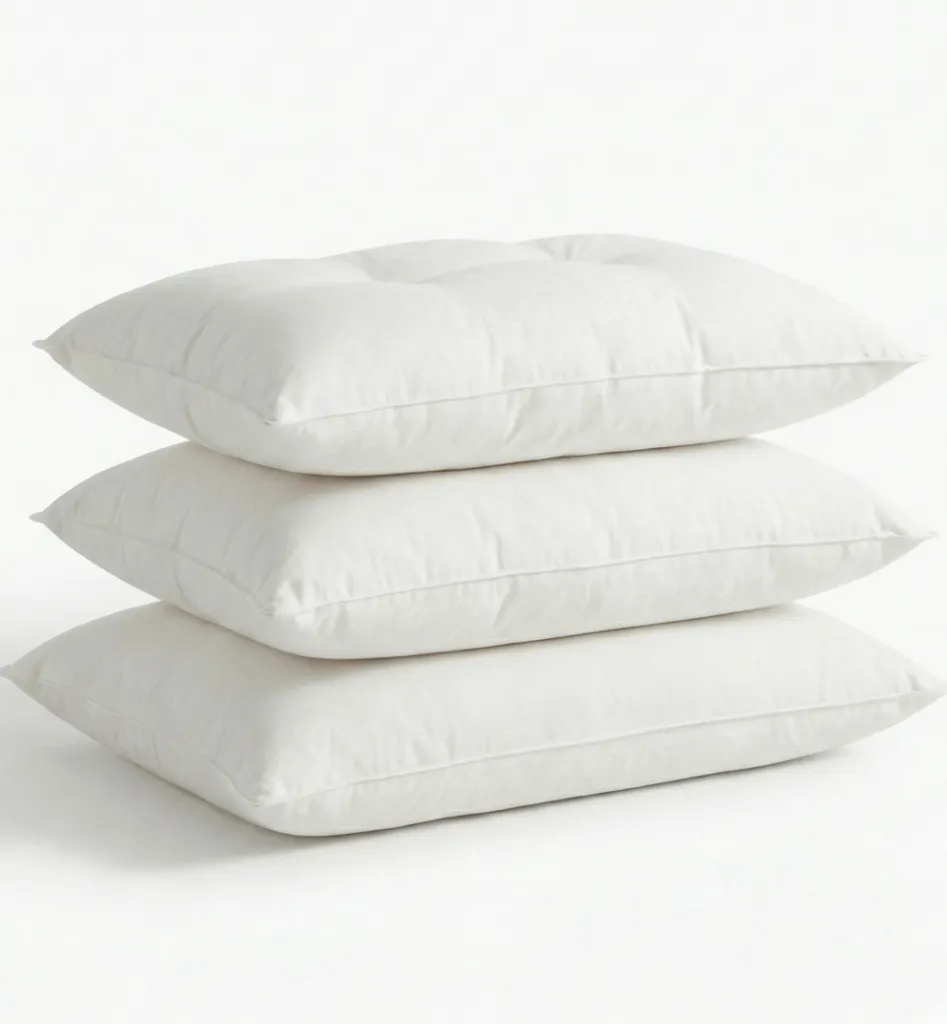
Experience True Alignment.
Say goodbye to morning neck pain and migraines. The Siestly pillow features a unique tufted design that cradles your head for perfect orthopedic support all night long.
Shop the Pillow