Insights
How Often Should You Replace Your Pillow? The Science-Backed Answer
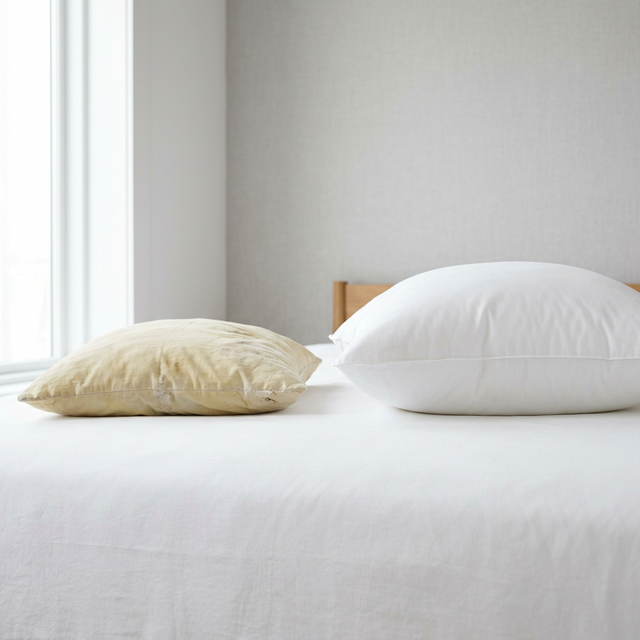
How old is your pillow? If you have to think about it for more than three seconds, it’s probably too old.
The average person keeps their pillow for 3.2 years, according to industry data. But depending on the material, many pillows are functionally dead in as little as six months. You wouldn’t wear the same pair of shoes for three years without replacing the insoles, yet you trust a slowly decomposing cushion to support the most important part of your skeleton - your cervical spine - for eight hours every single night.
Here’s the definitive, science-backed answer to how often you should replace your pillow.
The Lifecycle of Pillow Materials
Not all pillows degrade at the same rate. The material inside your pillow determines its structural lifespan and hygiene ceiling.
Polyester Fiberfill: 6–12 Months
The most common pillow type is also the shortest-lived. Polyester fibers are thin, weak strands that compress permanently under repeated weight. After about 6 months of nightly use, the fibers mat together, creating the clumpy, lumpy texture you’ve probably felt. Once this happens, the pillow offers zero consistent support. It’s a textbook case of pillow failure.
Down and Feather: 1–2 Years
Natural down lasts longer than polyester because the feather clusters trap more air. However, down absorbs moisture readily, causing it to clump and lose loft. Feather quills can also poke through the fabric, and down pillows are a haven for dust mite colonies.
Memory Foam: 3–5 Years
High-density memory foam is the most durable pillow material commercially available. Because it’s a single solid block rather than loose fibers, it doesn’t clump and resists permanent compression. The primary degradation factor is the gradual breakdown of the foam’s cellular structure due to body heat and moisture. Even so, quality memory foam maintains functional support for several years - far outlasting any fiber-based alternative.
The Allergen Time Bomb Inside Your Pillow
Material lifespan is only half the story. Even if your pillow feels structurally fine, it might be a biological hazard.
The Weight Gain Problem
A frequently cited study found that after two years, up to one-third of a pillow’s weight can consist of dead skin cells, dust mites, dust mite feces, fungal spores, and body oils. The Asthma and Allergy Foundation of America reports that dust mites are one of the most common indoor allergen triggers, affecting millions of people who may not even realize their pillow is the source.
How This Affects You
If you wake up with a stuffy nose, itchy eyes, or unexplained congestion every morning, your pillow is likely the culprit. These allergens accumulate inside the pillow - washing the pillowcase only addresses the surface. Over time, your pillow becomes a sealed reservoir of biological waste that you press your face against for a third of your life.
This is also why your pillow may start to turn yellow over time - those stains are visible evidence of the organic buildup happening inside.
The Three Tests to Know It’s Time
1. The Fold Test: Fold your pillow in half. If it stays folded instead of springing back open, the internal structure has permanently collapsed. The pillow is dead.
2. The Smell Test: Remove the pillowcase and deeply inhale. If there’s a musty, sour, or stale odor, moisture and biological matter have saturated the core. No amount of washing will fix this.
3. The Symptom Test: Are you identifying bad pillow symptoms like waking up with neck pain, headaches, or stiffness that fades during the day? Your pillow has failed its primary structural job.
Investing in Longevity
The cheapest pillow is rarely the cheapest option. A $15 polyester pillow replaced twice a year costs $30 annually, offers inconsistent support, and exposes you to allergens for months before you realize it’s time to replace.
A premium memory foam pillow like the Siestly Pillow provides 3–5 years of consistent, hypoallergenic support. The gel-infused memory foam core resists dust mite penetration, repels moisture, and maintains its structural integrity night after night.
Stop buying disposable sleep support. Visit the Siestly Pillow page and invest in the pillow you won’t need to replace next season.
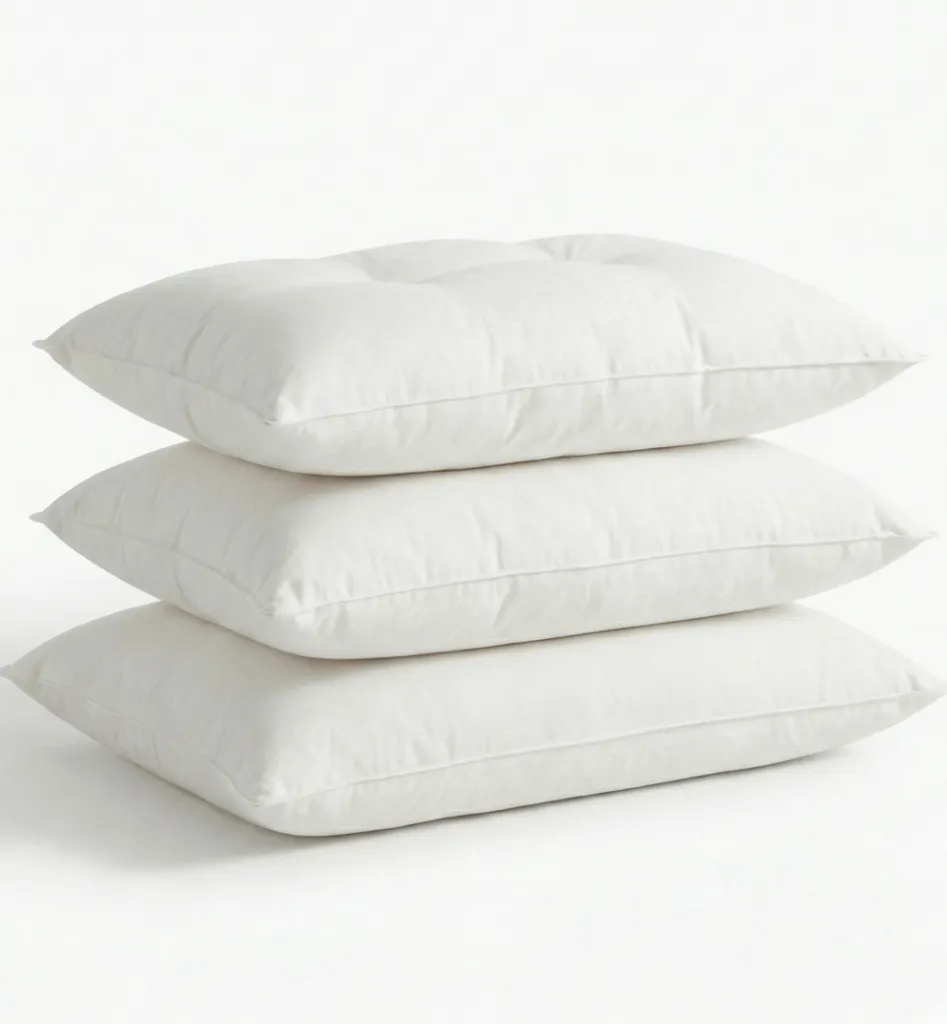
Experience True Alignment.
Say goodbye to morning neck pain and migraines. The Siestly pillow features a unique tufted design that cradles your head for perfect orthopedic support all night long.
Shop the Pillow