Insights
Why Your Pillow Turns Yellow - and Why It's a Health Risk
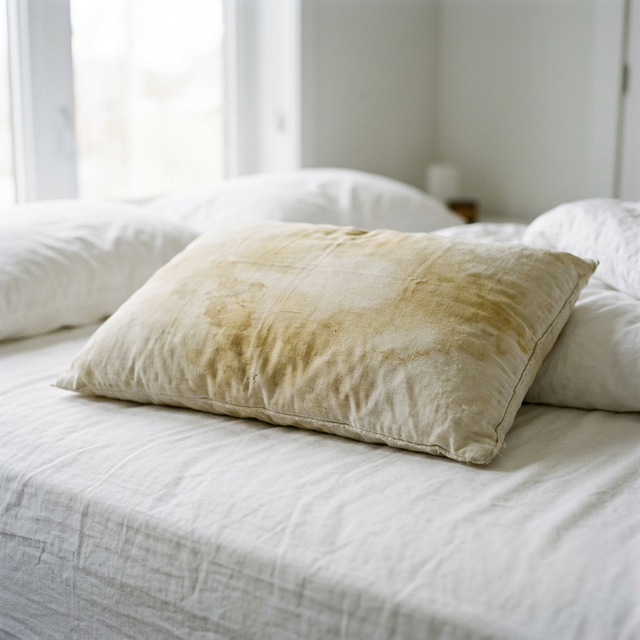
Pull the pillowcase off your pillow right now. Go ahead - we’ll wait.
If what you see underneath is a patchwork of yellow, brown, and darker stains, you are not alone. Those stains are incredibly common, and they are also incredibly telling. Your yellow pillow isn’t just an eyesore - it’s a biological warning sign that what you’re pressing your face against every night has become an active health hazard.
The Chemistry of Yellowing
Sebum: Your Skin’s Oil Factory
Your skin - especially the skin on your face and scalp - is covered by sebaceous glands that continuously produce an oily substance called sebum. Sebum is essential for skin health: it moisturizes, waterproofs, and protects. But it doesn’t stop being produced when you fall asleep.
Every night, sebum transfers from your skin through the pillowcase and into the pillow core. Once inside the pillow, it undergoes oxidation - a chemical reaction with oxygen that converts the clear, light oil into a darker, yellowish compound. This is the exact same process that turns a sliced apple brown.
Sweat: The Silent Saturator
The average person produces approximately 200 milliliters of sweat per night, even without noticeable night sweats. According to the Cleveland Clinic, increased nighttime sweating can also be triggered by hormonal changes, medications, or sleeping in a hot environment.
This moisture passes directly into your pillow, where it creates a warm, damp interior environment - the perfect breeding ground for dust mites and mold.
The Saliva Factor
Drooling during sleep is extremely common, especially for side sleepers and mouth breathers. Saliva contains digestive enzymes and proteins that, once absorbed into the pillow fabric, break down and contribute to both staining and odor.
Why It’s Not Just a Cosmetic Problem
Dust Mite Paradise
Dust mites are microscopic organisms that feed on dead human skin cells. A single used pillow can contain tens of thousands of mites. They thrive in warm, moist environments - exactly the environment created by a sweat-saturated, oil-soaked yellow pillow.
It’s not the mites themselves that cause problems - it’s their fecal pellets. These tiny particles become airborne when you move your head on the pillow, and inhaling them triggers allergic reactions including nasal congestion, sneezing, watery eyes, and asthma attacks.
If you’ve ever noticed mystery dark stains on your pillow, those represent even more advanced biological degradation.
Fungal Growth
Researchers have found that a standard used pillow can harbor more than 16 species of fungus, including Aspergillus fumigatus - a species directly linked to respiratory disease. The combination of moisture, warmth, and organic matter inside an old pillow creates an ideal fungal habitat.
Skin Reactions
Pressing your face against a pillow saturated with oxidized oils and microbial life for eight hours can contribute to acne breakouts, contact dermatitis, and skin irritation. If you’ve noticed persistent, unexplained facial breakouts, your pillow may be sabotaging your skin.
When Yellow Means “Replace”
A light, uniform yellowing on a pillow that’s less than a year old might be treatable with a thorough machine wash (if the material allows it). But if your pillow shows any of the following, it’s beyond saving:
- Deep, dark staining that remains after washing
- A musty or sour odor detectable without the pillowcase
- Visible structural degradation - lumps, flat spots, or failed fold tests
- You’ve had the pillow for over a year (polyester) or over two years (down)
At this point, no amount of cleaning will remove the organic matter deep inside the core. It’s time to replace your pillow entirely.
Prevention: The Material Matters
The best defense against pillow yellowing is choosing a material that resists moisture penetration. Polyester fiberfill and down are essentially sponges - they absorb and retain everything.
The Siestly Pillow is constructed from a solid block of gel-infused memory foam. Unlike loose fibers, the closed-cell foam structure resists the absorption of oils, sweat, and moisture. The gel infusion actively dissipates heat, reducing perspiration at the source.
Combined with a breathable, removable, and washable cover, the Siestly Pillow maintains a hygienic sleeping surface far longer than any traditional down or fiberfill alternative.
Stop sleeping on biological waste. Visit the Siestly Pillow page and upgrade to a pillow that stays clean, supportive, and white.
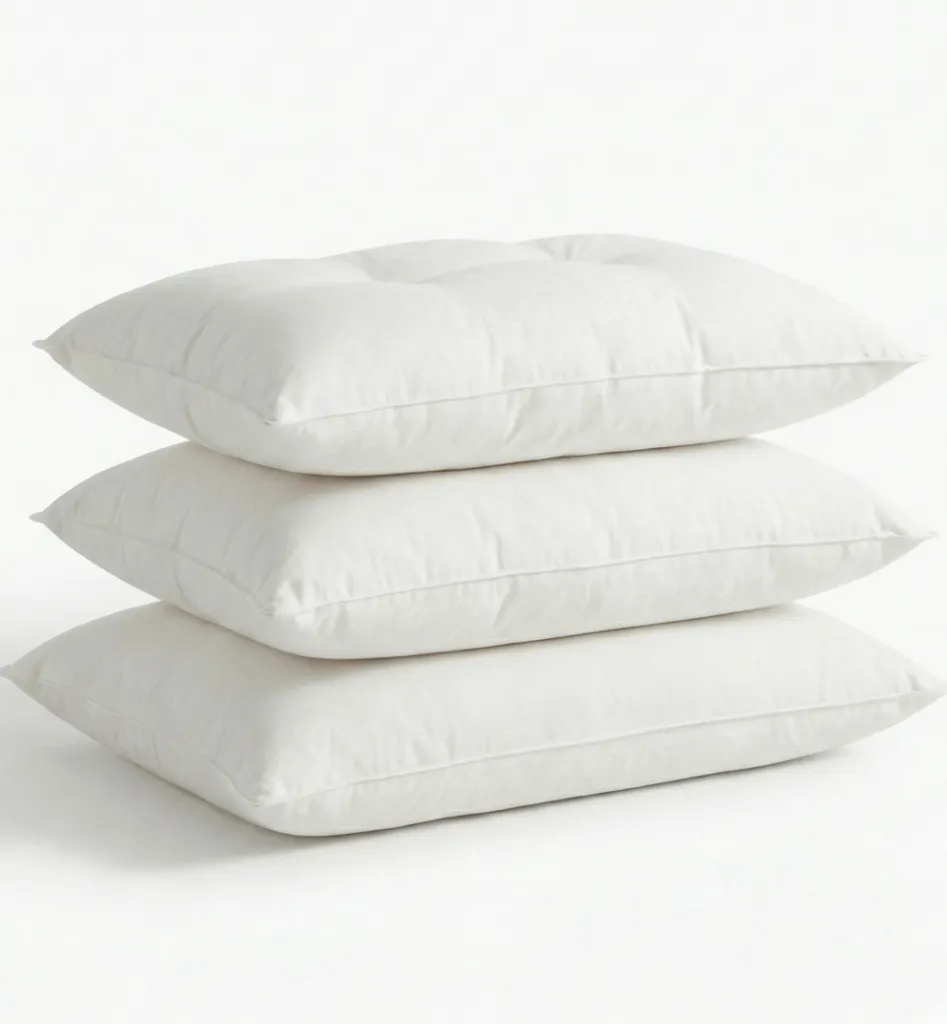
Experience True Alignment.
Say goodbye to morning neck pain and migraines. The Siestly pillow features a unique tufted design that cradles your head for perfect orthopedic support all night long.
Shop the Pillow