Insights
The Migraine-Pillow Connection: Triggers, Alignment, and Relief

If you suffer from chronic migraines, you know the drill: tracking triggers, avoiding bright lights, managing stress, and staying hydrated. But what if one of your biggest migraine triggers is the very thing you rest your head on every night?
The connection between migraines and pillows is profound, yet frequently overlooked.
For many migraine sufferers, the pain doesn’t originate in the head itself, but rather in the complex network of muscles, nerves, and joints in the neck and shoulders. If your pillow is failing to support this delicate area, you are essentially setting a trap for a migraine to trigger the moment you wake up.
How Your Pillow Triggers Migraines
The “Cervicogenic” Connection
A large percentage of headaches and migraines are cervicogenic - meaning they originate from the cervical spine (your neck). When you sleep on a pillow that is too flat, your head drops backward or downward. If it’s too thick, your neck is painfully cranked upward.
In both scenarios, the muscles in your neck have to work overtime to stabilize your head while you sleep. This prolonged tension pulls on the base of the skull, irritating the occipital nerves. This irritation travels up over the scalp and behind the eyes, manifesting as a full-blown pounding migraine. Finding the correct pillow height is critical for prevention.
Restricted Blood Flow
Poor sleep posture doesn’t just tense muscles; it can subtly compress the blood vessels in your neck. Reduced blood flow and oxygen to the brain during sleep is a well-documented trigger for severe morning migraines.
The Neck-Headache Connection (Cervicogenic Headaches) (Cervicogenic Headaches)
To understand how a pillow causes a headache, you have to look down at your neck. The majority of morning headaches are cervicogenic - meaning the source of the pain originates in the cervical spine (the neck region) but is felt in the head.
Your neck is a highly complex structure of vertebrae, muscles, ligaments, and sensitive nerves. When you lie down, your pillow is responsible for holding this structure in a perfectly neutral alignment, parallel to your mattress.
What Happens When Your Pillow Fails
If the pillow is too flat: Your head drops backward (if sleeping on your back) or downwards toward your shoulder (if sleeping on your side). To prevent your spine from overextending, your neck muscles contract and remain tense for eight straight hours.
If the pillow is too high: Your chin is forced into your chest, or your head is cranked upwards sideways. This stretches the muscles and ligaments in the back of your neck to their absolute limit.
The Neural Pathway of Pain
When your neck muscles are locked in tension all night due to a bad pillow, they become inflamed and fatigued. This severe tension irritates the occipital nerves - two pairs of nerves that run from the top of your spinal cord, up through your neck muscles, and over your scalp.
When these nerves are squeezed or irritated by tight muscles, they send intense pain signals mimicking a severe tension headache or even a migraine. That means the throbbing in your temples is essentially your neck screaming for mercy.
What Makes the “Best Pillow for Migraines”?
If you want to eliminate nighttime triggers, you cannot use cheap polyester fiberfill or traditional down pillows. These materials are too volatile; they shift, flatten, and collapse under the weight of your head within an hour of falling asleep.
The best pillow for migraines must have specific structural qualities:
- Consistent, Unshifting Support: The pillow must maintain its shape throughout the entire night. It shouldn’t require you to wake up and “fluff” it.
- The “Neutral Zone” Capability: It needs to contour exactly to the curve of your neck, filling the empty space between your shoulder and head. This takes the workload completely off your neck muscles.
- Pressure Relief: It shouldn’t push back fiercely against your head. It needs to absorb the weight, distributing pressure evenly.
Why Siestly is the Ultimate Migraine Defense
We engineered the Siestly Pillow specifically to combat cervical strain.
Instead of cheap fluff, Siestly utilizes an Active-Core memory foam blend. When you lie down, the pillow adapts to your unique anatomical shape, creating a perfect cradle for your head. More importantly, it holds that shape.
By locking your neck into perfect spinal alignment, the Siestly pillow allows your cervical muscles to finally disengage, relax, and heal overnight. For many users, eliminating this nightly neck tension has resulted in a dramatic reduction in morning headache frequency and migraine severity.
Don’t let a bad pillow dictate how your day is going to feel. Upgrade your sleep support, protect your neck, and take back your mornings. For more strategies, read our guide on managing other migraine triggers like light, noise, and stress.
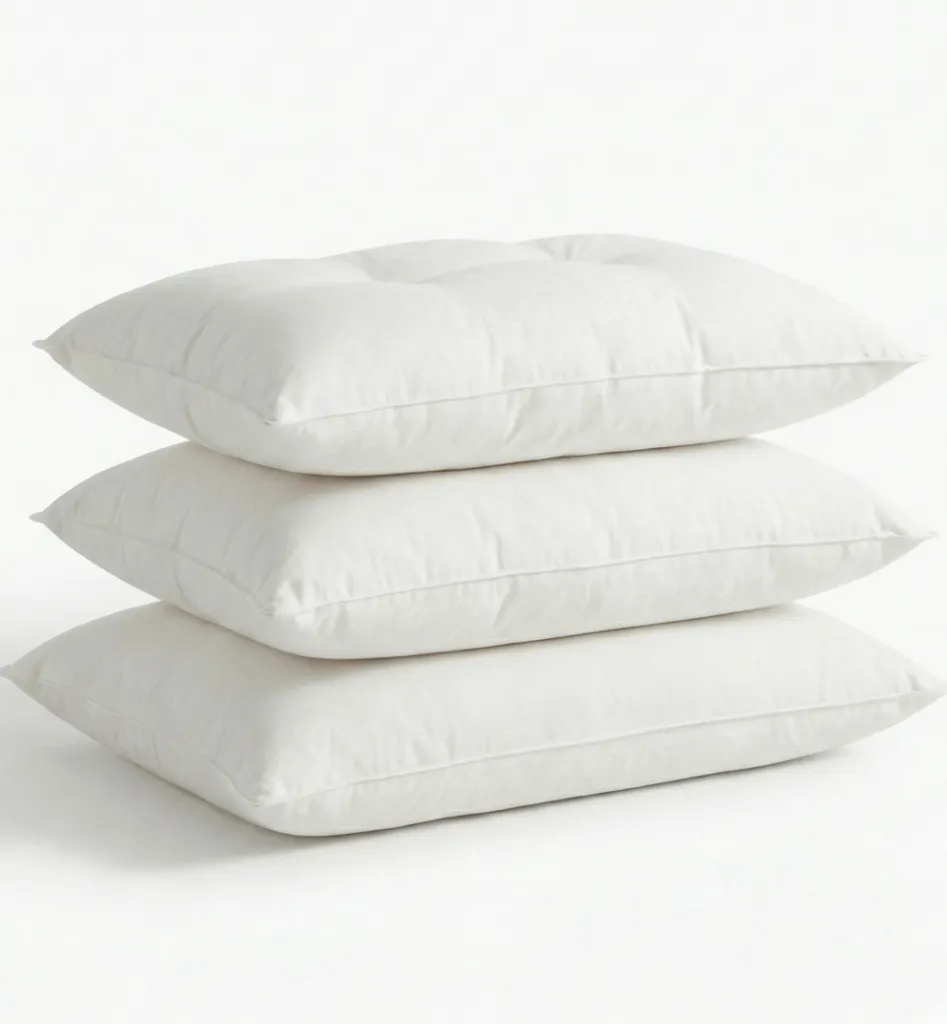
Experience True Alignment.
Say goodbye to morning neck pain and migraines. The Siestly pillow features a unique tufted design that cradles your head for perfect orthopedic support all night long.
Shop the Pillow