Insights
Pillow and Snoring: How Head Elevation Opens Your Airways

If your partner has ever nudged you at 3 AM because your snoring rivaled a chainsaw, or if you wake up with a dry, raw throat despite not being sick, the answer to your problem might be surprisingly simple: your pillow is too flat.
Snoring is not just an annoying nighttime habit. It is a physical event caused by turbulent airflow through a partially obstructed airway. And the position of your head during sleep - dictated entirely by your pillow - plays a massive role in whether that airway stays open or collapses.
The Physics of Snoring
Gravity Is Not Your Friend
When you lie down, gravity immediately begins pulling the soft tissues in your throat downward. The pharynx - the muscular tube connecting your nasal passages to your esophagus - is surrounded by soft tissue including the soft palate, the uvula, and the base of the tongue.
In a standing or seated position, these tissues are held away from the airway by muscle tone and gravity pulling them forward. The moment you lie flat on your back, gravity reverses direction relative to your airway. Those same tissues sag backward, partially occluding the passage through which you breathe.
The air has to squeeze through a narrower opening. This increases velocity and creates turbulence, which vibrates the relaxed soft tissues. That vibration is the sound of snoring.
Why It Gets Worse Over Time
According to the Mayo Clinic, snoring tends to worsen with age because muscle tone naturally decreases as we get older. The tissues in the throat become more lax and more susceptible to gravitational collapse. A pillow that was “fine” five years ago may no longer provide enough elevation to keep the airway clear.
The Pillow Connection
Flat Pillows = Closed Airways
A flat, compressed pillow positions your head almost level with your body. This maximizes the gravitational effect on your throat tissues. Combined with the natural decrease in muscle tone during deep sleep, even moderate gravitational pull can cause enough tissue collapse to trigger loud, disruptive snoring.
The Head-Elevation Solution
The clinical approach to positional snoring is straightforward: elevate the head above the chest. Research published through the National Institutes of Health has shown that even moderate head elevation of 4–6 inches can significantly reduce the frequency and volume of snoring in positional snorers.
Elevation achieves two things:
- Shifts gravity’s pull direction. With the head raised, gravity pulls the tongue and soft palate slightly forward and downward along the throat, rather than directly into the airway.
- Reduces venous pressure. Elevation helps drain fluid that can pool in the tissues of the neck during flat sleeping, reducing the swelling that further narrows the airway.
Why Stacking Pillows Doesn’t Work
Many snorers instinctively stack two or three pillows under their head. While this does elevate the head, it creates a severe bend at the neck that actually worsens the problem.
When your neck is sharply kinked forward, it compresses the front of the throat while overstretching the back. Think of it like bending a garden hose - the internal passage narrows at the bend point. The key is gentle, consistent elevation that keeps the cervical spine in a neutral alignment, not a dramatic chin-to-chest angle.
This is also why your pillow’s impact extends far beyond just comfort - it directly affects your respiratory function during sleep.
The Siestly Approach to Quieter Nights
The Siestly Pillow is engineered from a single, solid block of gel-infused memory foam. It provides the exact loft needed to gently elevate your head without creating a harsh neck angle.
Unlike stuffed pillows that shift and collapse under your head - forcing you to constantly readjust - the Siestly’s high-density foam maintains its shape all night. Your head stays elevated. Your airway stays open. The snoring stops.
If you or your partner have been losing sleep to snoring, the cheapest and most effective intervention isn’t a mouth guard or a nasal strip - it’s upgrading to a pillow that actually keeps your head where it needs to be.
Choosing the right pillow height and the right pillow material are the two most impactful decisions you can make for quieter, deeper sleep.
Explore the Siestly Pillow and finally give everyone in the bedroom the silence they deserve.
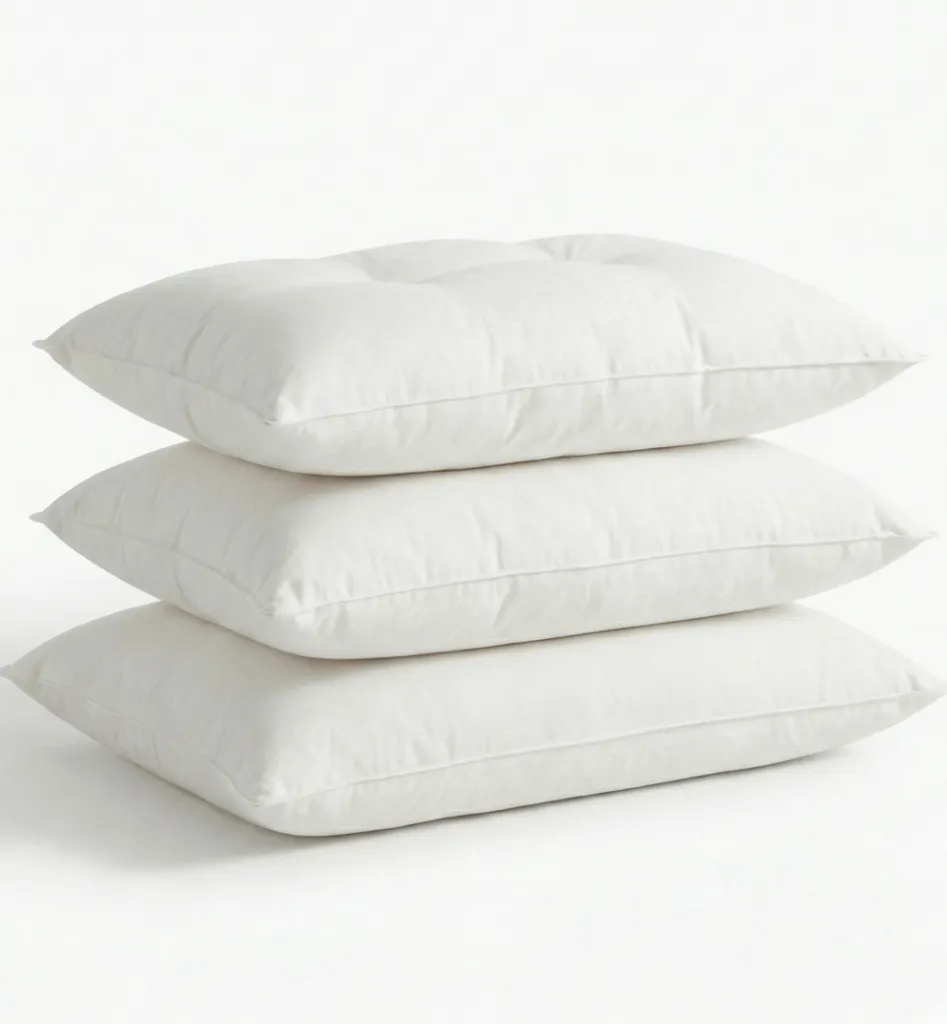
Experience True Alignment.
Say goodbye to morning neck pain and migraines. The Siestly pillow features a unique tufted design that cradles your head for perfect orthopedic support all night long.
Shop the Pillow