Insights
Memory Foam vs. Down Pillows: A Science-Based Comparison
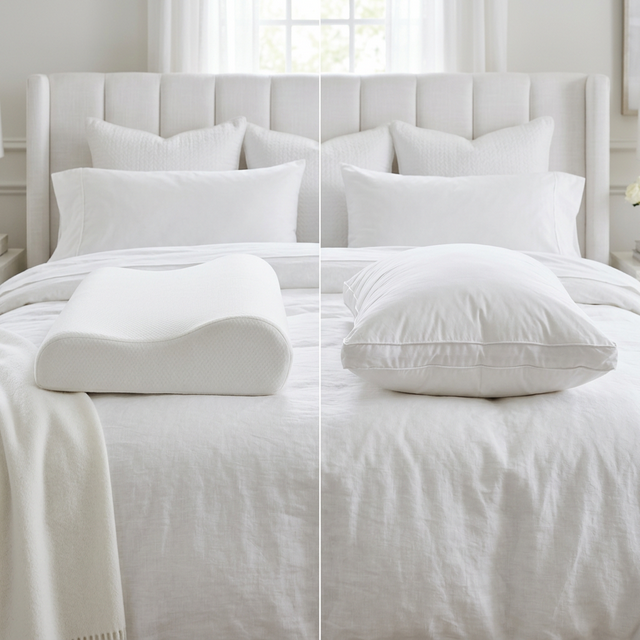
You’re standing in a store, or scrolling online, staring at two pillows. One is plush, cloud-like, and filled with natural down feathers. The other is dense, structured, and made of viscoelastic memory foam. They both promise better sleep. They both feel completely different in your hands.
So which one is actually better for your health, your sleep, and your wallet? Let’s break it down, category by category, with no marketing fluff.
Category 1: Support and Alignment
Memory Foam
Memory foam was originally developed by NASA in the 1960s to cushion astronauts during takeoff. It works by responding to heat and pressure: when you lay your head on it, the foam softens at the point of contact, conforming precisely to the contours of your skull and neck.
This creates a custom-molded cradle that distributes pressure evenly. More importantly, the foam holds this shape throughout the night, providing consistent support without shifting, bunching, or collapsing.
Down
Down pillows offer a luxurious, soft feel - but softness is not the same as support. Down clusters compress easily under the weight of a human head (approximately 10 pounds). Within minutes of lying down, a down pillow typically loses significant loft as the feathers compress and shift laterally.
This means your cervical spine starts the night in one position and gradually drifts into poor alignment as the pillow deflates. If you find yourself fluffing and folding your pillow in the middle of the night, you’re experiencing this in real time.
Winner: Memory Foam - Consistent, adaptive support that doesn’t degrade during the night.
Category 2: Durability and Lifespan
Memory Foam
High-density memory foam maintains its structural integrity for 3 to 5 years with daily use. The solid cellular structure resists the breakdown that plagues loose-fill materials. Over time, memory foam does gradually lose some of its responsiveness as the cellular walls slowly break down from heat and moisture - but this process is dramatically slower than fibers or feathers.
Down
Quality down pillows last 1 to 2 years before the feather clusters mat together, lose their loft permanently, and need replacement. Down also absorbs and retains moisture, which accelerates the breakdown of the feather barbs. If you want to know when it’s time to swap, check the pillow replacement timeline.
Winner: Memory Foam - Lasts 2–3x longer than down, providing better long-term value.
Category 3: Allergies and Hygiene
Memory Foam
Solid memory foam is inherently resistant to dust mites because there are no internal air pockets or loose fibers for mites to colonize. The dense foam structure prevents the penetration of dead skin cells, sweat, and oils that mites feed on. For allergy sufferers, memory foam is the clinically superior choice.
Down
Down feathers contain natural proteins (keratin) that can themselves trigger allergic reactions in sensitive individuals. Beyond the feathers themselves, the fluffy, porous structure of down pillows is an ideal habitat for dust mites. Down absorbs moisture readily, creating the warm, damp conditions that mites and mold need to thrive.
This is also why down pillows tend to turn yellow much faster than memory foam - they absorb more biological material.
Winner: Memory Foam - Hypoallergenic, resistant to dust mites, and easier to keep clean.
Category 4: Temperature
Memory Foam
Traditional memory foam’s biggest weakness is heat retention. The dense structure that makes it supportive also traps body heat, causing the pillow to feel warm. However, modern gel-infused memory foams have largely solved this problem. Gel beads or gel layers actively pull heat away from the surface, creating a cooler sleeping experience.
Down
Down is naturally breathable and lightweight. Air circulates freely through the feather clusters, dissipating heat effectively. For hot sleepers, traditional memory foam can be uncomfortable - but gel-infused foam closes this gap significantly.
Winner: Tie - Traditional down is cooler, but gel-infused memory foam matches its temperature performance.
Category 5: Cost per Night
Here’s where the math gets interesting:
- Down pillow: $80–$150, replaced every 1.5 years = $0.15–$0.27 per night
- Quality memory foam: $60–$120, replaced every 4 years = $0.04–$0.08 per night
Memory foam costs less per night of use because it lasts dramatically longer. The “expensive” foam pillow is actually the budget-conscious choice when you factor in replacement cycles.
Winner: Memory Foam - 2–3x cheaper on a per-night basis.
The Verdict
Down pillows excel in one area: initial softness. That cloud-like plushness when you first lay down is undeniably appealing. But that feeling fades quickly - sometimes within minutes - as the down compresses under your head.
Memory foam wins on every functional metric: support, durability, hygiene, and long-term cost. For people who suffer from neck pain, morning stiffness, or allergies, the choice is clinically clear.
The Best Memory Foam Pillow
The Siestly Pillow represents the best of what modern memory foam engineering offers. Its gel-infused Active-Core construction provides the adaptive support of premium memory foam with the active cooling technology that eliminates the heat-retention drawback.
It’s the durability of foam, the comfort of a luxury hotel pillow, and the hygiene of a medical-grade sleeping surface - all in one product designed to last.
Ready to move beyond the down debate? Visit the Siestly Pillow page and experience the material that science favors.
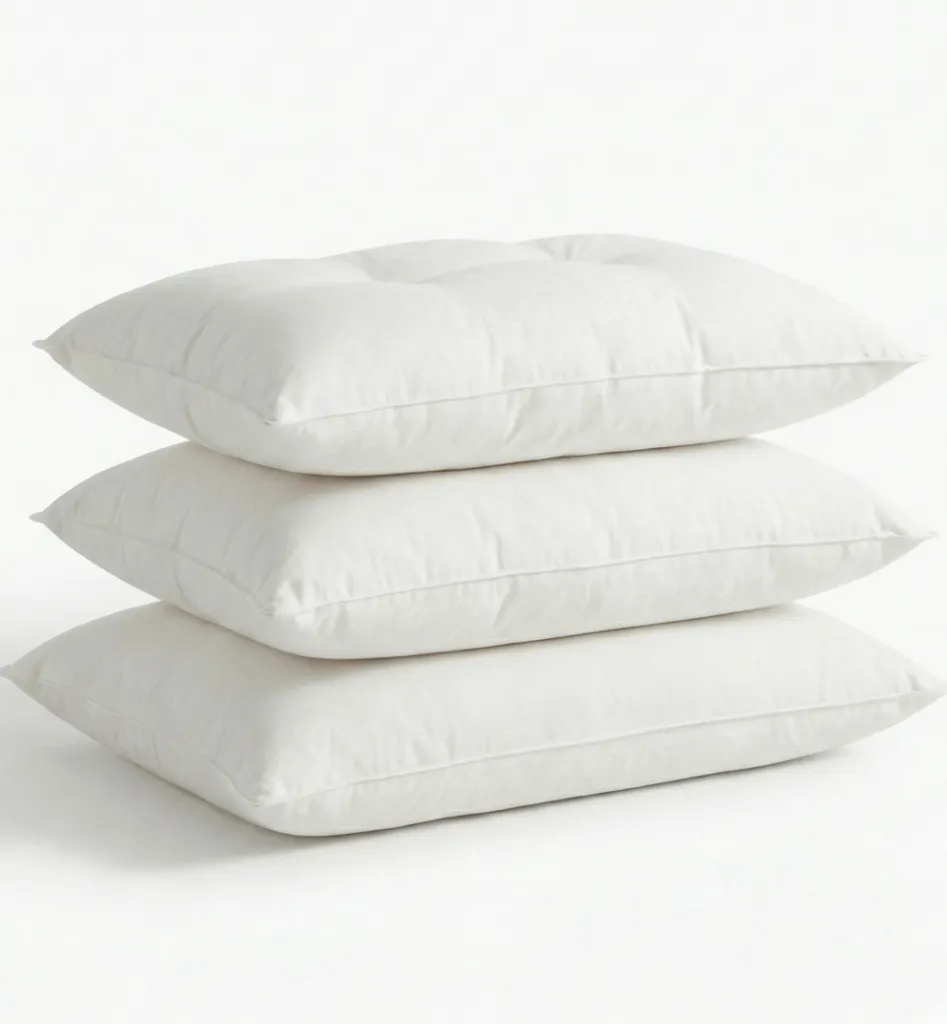
Experience True Alignment.
Say goodbye to morning neck pain and migraines. The Siestly pillow features a unique tufted design that cradles your head for perfect orthopedic support all night long.
Shop the Pillow